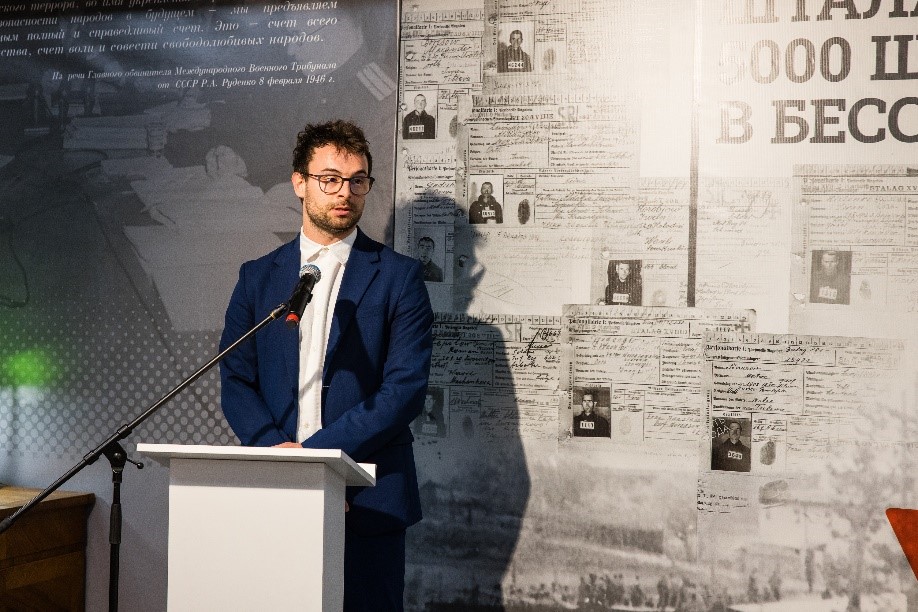
Historian Daniel Siter at the Prestigious Victory Museum in Moscow
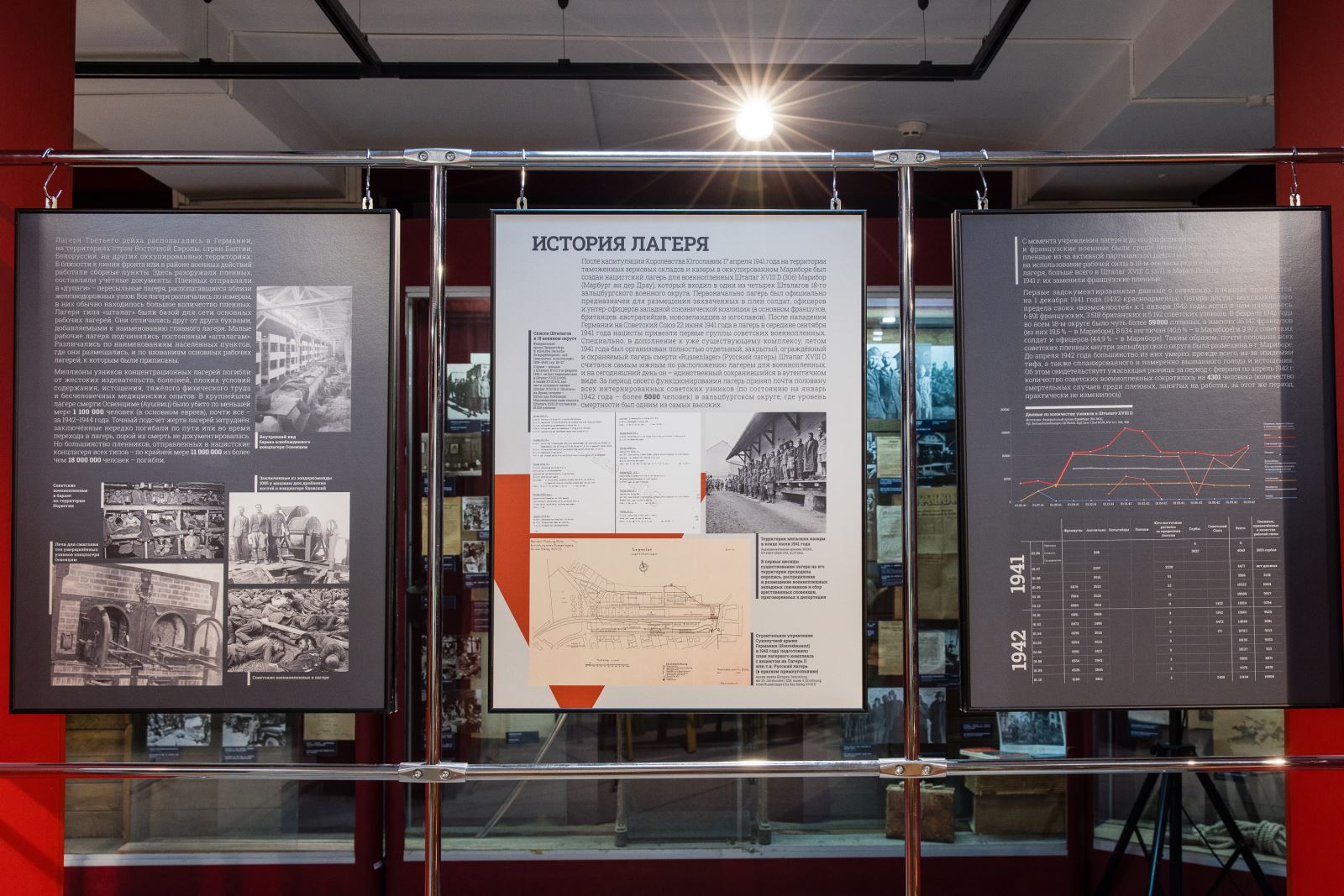
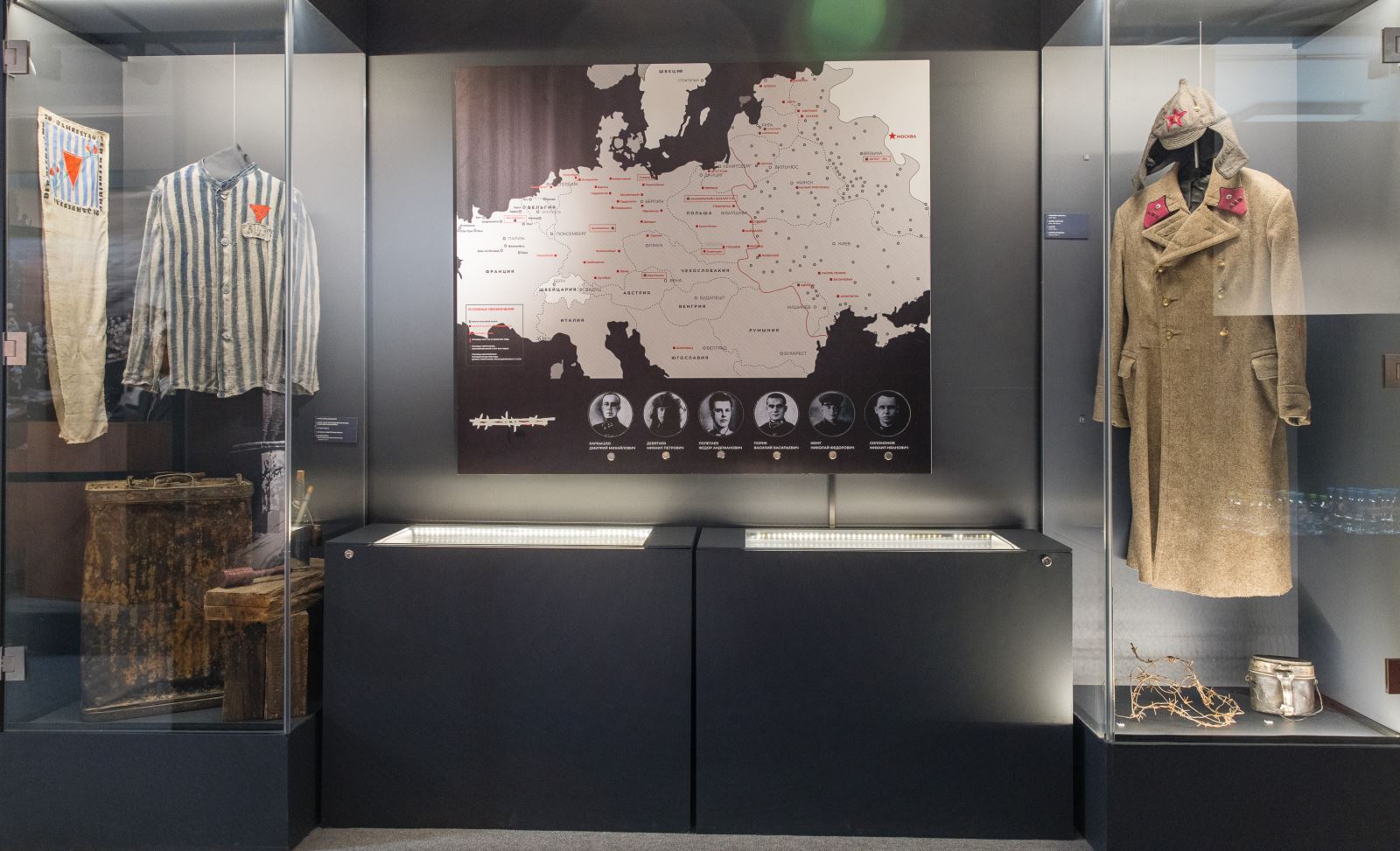
Researcher, lecturer, and PhD candidate at Alma Mater Europaea – Faculty of Humanities, Daniel Siter has authored his new exhibition “Stalag XVIII D: 5000 Steps to Immortality” on the Nazi prisoner-of-war camp (Stalag XVIII D in Maribor) with original research findings, insights and the newest personal material objects from private collections.
The opening ceremony with a lecture presentation was on April 10, 2024, at the Victory Museum in Moscow. The exhibition was made possible, prepared and organized by the International Research Centre of the Second World War Maribor (the leading institution in Slovenia for research on prisoners of war), the University of Alma Mater Europaea, and the Victory Museum. Siter participated in the exhibition project based on a special invitation from the Victory Museum – one of the largest museums in the world.
In the opening speech, he explained this is a forgotten story of the destructive operation of the Nazi prisoner-of-war camp in Maribor. He added “that the exhibition is based on years of my research work in domestic and foreign archives/museums/institutes and fieldwork in five countries, as well as the collection of primary historical documents, particularly from the private collections of descendants and relatives of prisoners of war.
Stalag XVIII D was established in June 1941 in occupied Maribor. In 1941, it was one of the four Stalags in the 18th military district, but with many specifics. Siter explains: “Stalag in Maribor was the southernmost located prisoner-of-war camp in Hitler’s Third Reich and the only authentically preserved camp in the former 18th district.” During the war, it received almost half of all Soviet prisoners. “As a result, the mortality rate among them was the highest in Maribor,” Siter adds.
Unlike Western Allied prisoners, Soviet prisoners were not under the provisions of the Geneva Convention on the Treatment of Prisoners of War (1929). They were, therefore, not registered with the Red Cross as prisoners of war. Consequently, they were deliberately subjected to the worst daily treatment, catastrophic hygiene, living and food conditions, sadistic guard abuse, humiliation, extortion, mockery, and terrible psychophysical torture through starvation and exposure to cold.
Siter explains that this was a result of the totalitarianism and destructiveness of the war, the ideological conflict between Nazism and Bolshevism, the insane Nazi racial arguments of the inferiority of Slavic peoples, and the absence of the Geneva Convention. “Through all these measures and enslavement with forced physical labour, they were doomed to a cruel death,” Siter summarizes the tragedy of the captured Red Army soldiers.
In conclusion, he highlighted the event’s historical significance: “May this exhibition serve its primary purpose—the dissemination of historical knowledge, truth, memory, and lessons to younger generations, as well as an initiative for new research and openings.”
Media reports and interviews:
– https://www.dnevnik.si/1043050533
– https://tass.ru/obschestvo/20630833
– https://krtv.tv/2024/04/11/5-000-шагов-в-бессмертие/
– https://www.almamater.si/daniel-siter-v-prestiznem-muzeju-zmage-v-moskvi-